Severely Worn Teeth: Why It Happens and How Smiles Get Rebuilt
Yes, severely worn teeth can almost always be rebuilt. But here's what most websites won't tell you: the rebuild is the easy part. The reason your teeth wore down is the part that decides whether your new smile lasts fifteen years or fails in two.
Why teeth wear down
Teeth are hard, but they aren't invincible. Years of clenching or grinding, acid from reflux or diet, or a bite that hits the wrong way will slowly shorten teeth, flatten edges, and chip corners. Patients usually notice it in photos first: the smile shows less tooth, the face looks a little collapsed, and everything reads older than it should.
Why I diagnose before I design
When a patient with worn teeth asks me for veneers, my first job is to find out what destroyed the enamel, because that same force will happily destroy porcelain. Sometimes the answer is a night guard and conservative restorations. Sometimes the bite has collapsed enough that we need to rebuild the chewing foundation first, then layer the aesthetics on top. That is full mouth rehabilitation: function first, beauty built on it.
What a rebuild looked like for one patient
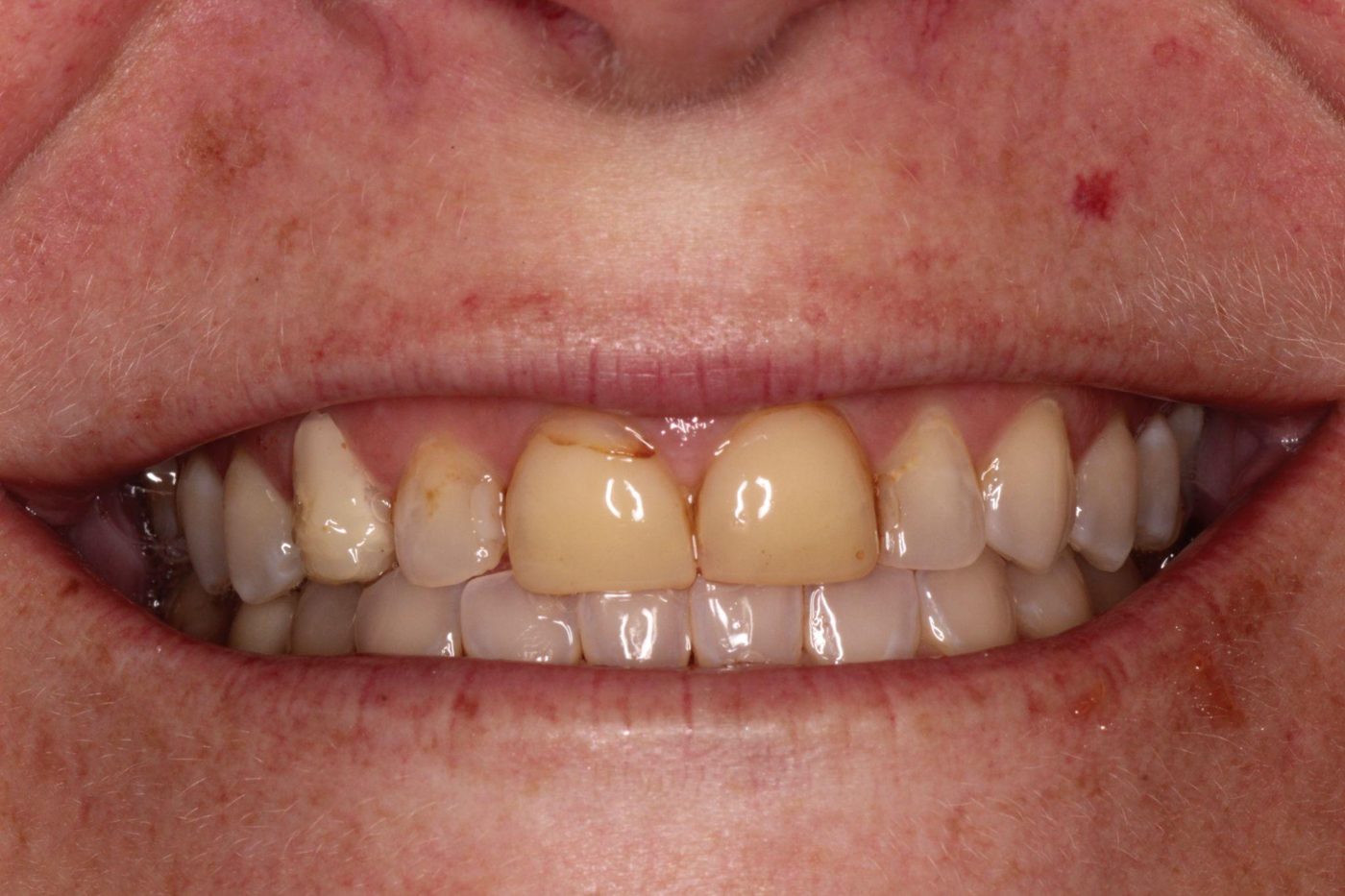
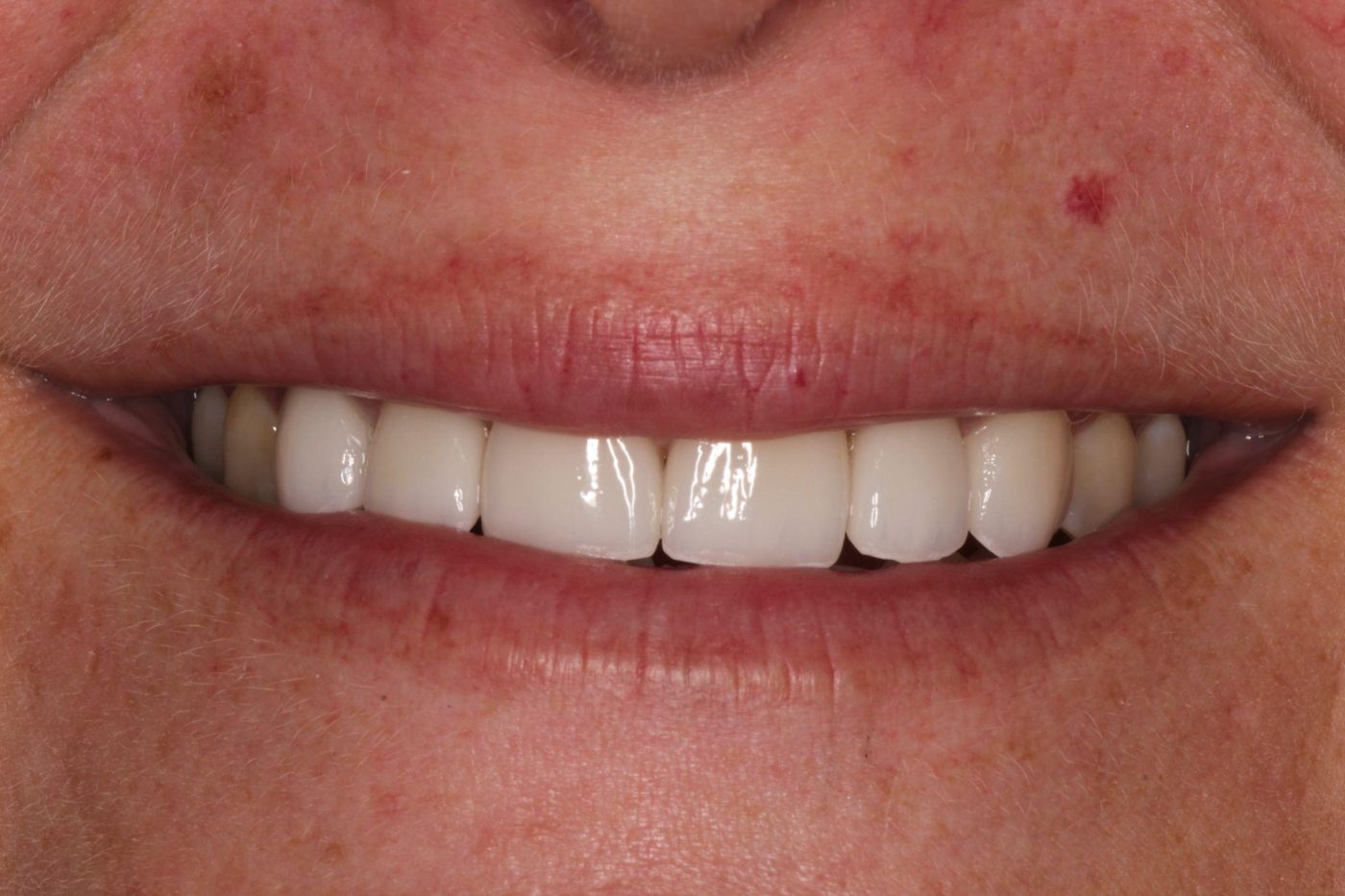
Decades of patchwork dentistry had stopped holding together. We stabilized her bite, replaced the failing work in planned stages, and matched the final porcelain to her face rather than to a shade tab. She never walked around unfinished, and the plan was phased so each stage stood on its own.
The honest part
Rebuilding a worn-down mouth is a significant investment, and it is quoted after a comprehensive exam, never from photos. If you grind and you skip the night guard afterward, I can't protect your result. And if a few conservative veneers will genuinely solve your case, that's what I'll recommend, because a rehabilitation you don't need is just expensive dentistry.
Start with the three-minute Smile Confidence Assessment, or see how plans get priced on Cost & Financing.
This article is educational and does not replace clinical diagnosis. Final recommendations require an in-person exam. Reviewed by Dr. Seth Calish, DMD.