Retire the dentistry that gives you away.
The flat, opaque crown. The dark line at the gum. The veneer that never quite matched. Dentistry from the ’90s and 2000s was good for its era, but materials have changed, and so has what’s possible. This is one of our most common and most satisfying cases.
Why old work looks like old work
Older porcelain-fused-to-metal crowns block light the way real enamel never does, teeth are slightly translucent, and metal-backed porcelain isn’t. Add natural gum recession exposing a dark metal margin, plus shades matched to teeth that have since aged, and you get restorations that announce themselves in every photo. Modern all-ceramic materials transmit light like enamel, and margins are designed to stay invisible.
Replacement makes sense if…
- Old crowns or veneers look flat, dark, or mismatched
- A dark line has appeared at your gumline
- Margins are leaking or decay is present underneath (now it’s a health issue)
- You’re whitening or redesigning your smile and old work won’t match
It doesn’t (yet) if…
- The work is sound and genuinely doesn’t bother you, we don’t replace dentistry to hit quotas
- Gum inflammation needs treatment first so new margins are placed on healthy tissue
- Underlying tooth structure needs evaluation, occasionally a tooth needs more than a new crown, and you deserve to know before we start
Questions about replacing old work
Do old crowns have to be replaced?
Will new crowns match my other teeth?
Can you replace just one tooth?
The hardest match in dentistry: one tooth.
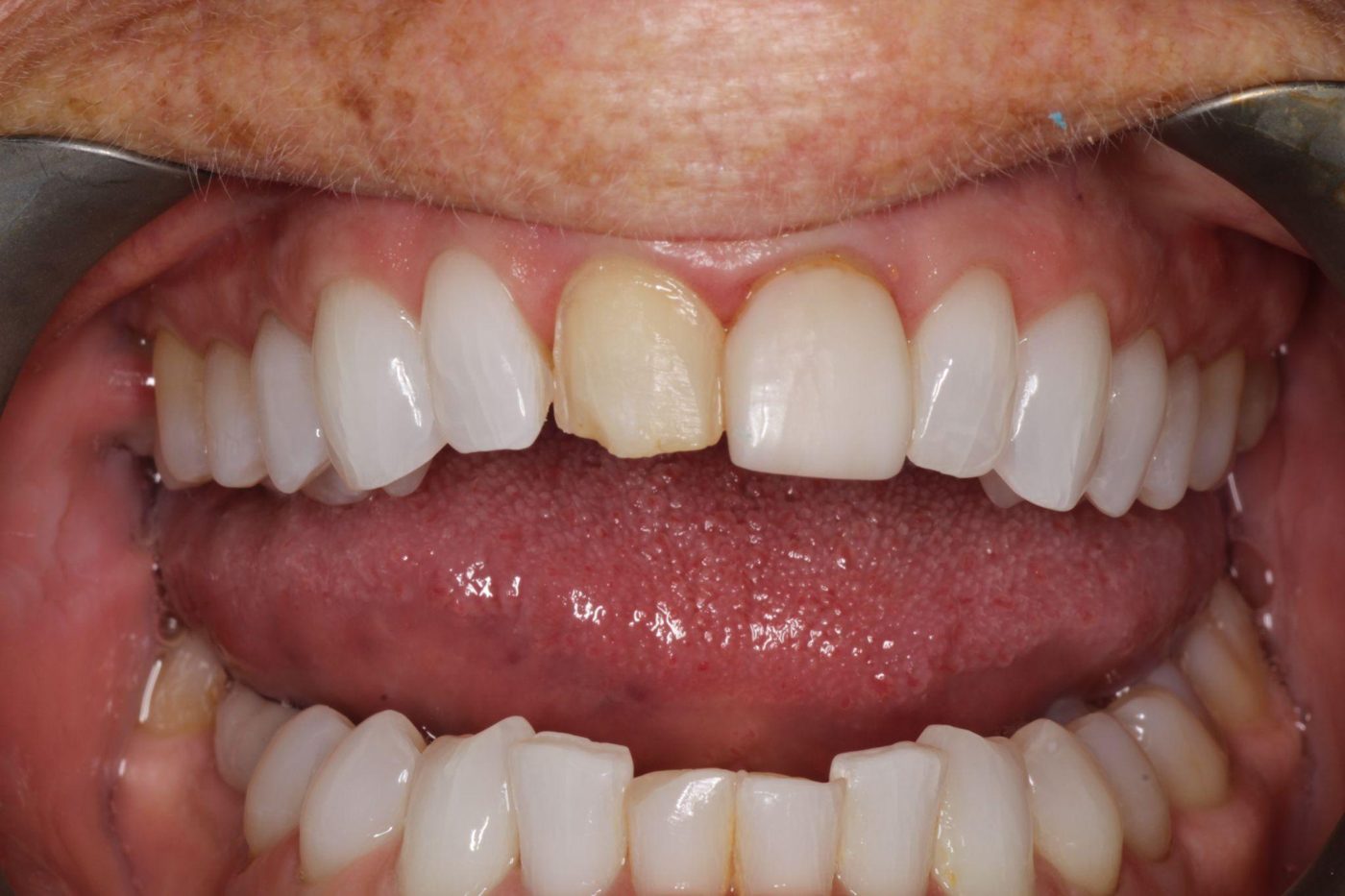
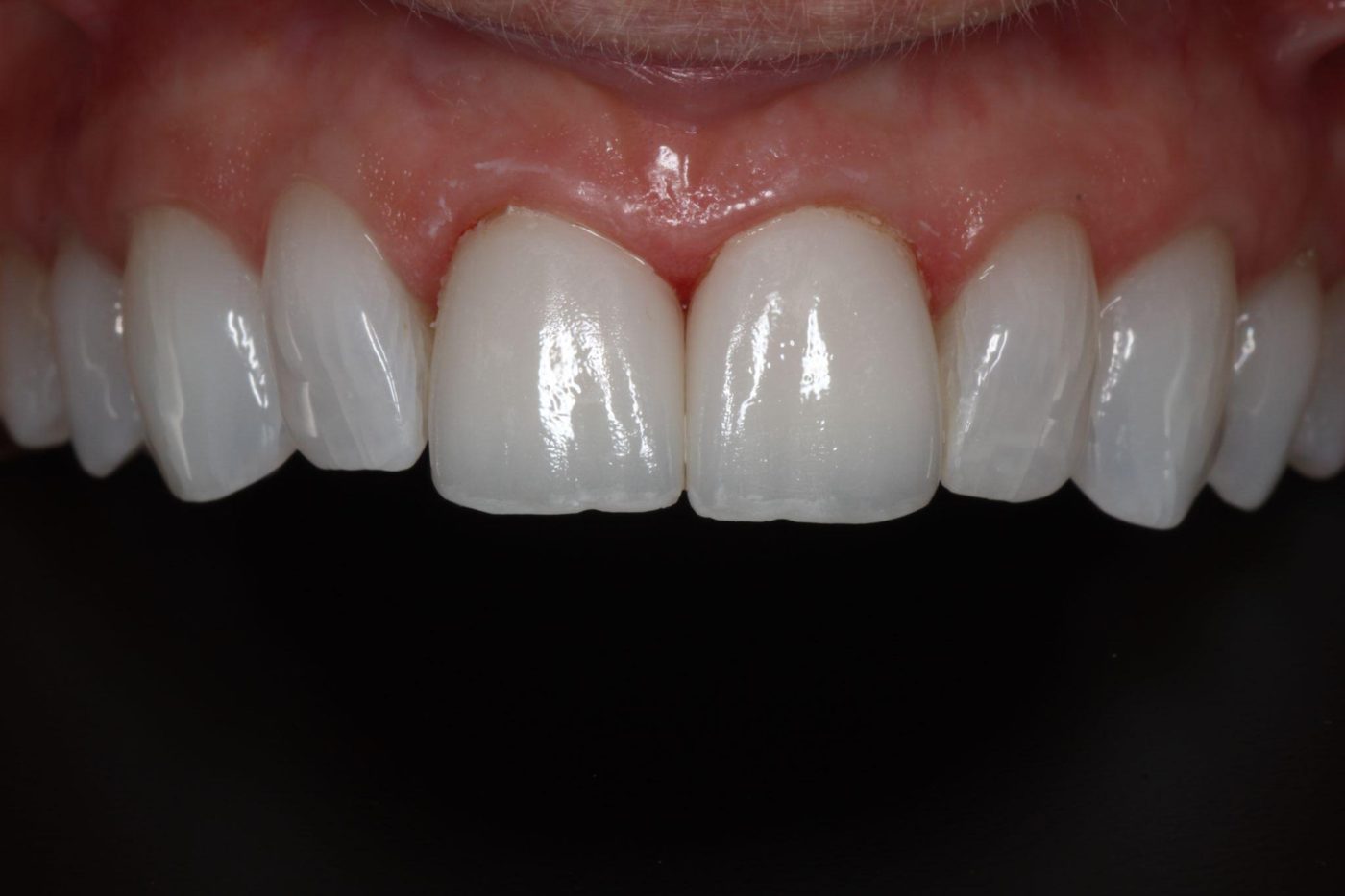
A single dark front tooth, restored so it can’t be picked out of the smile. Individual results vary.